
How DonBot's AI Receptionist Works: A Step-by-Step Technical Overview
Most people assume AI receptionists are just fancy voicemail. They are not. When a customer calls your DonBot AI line, they are talking to a system built on the same AI technology used by some of the most sophisticated tech companies in the world — assembled specifically for small businesses that cannot afford to miss a single call. Here is exactly how it all works, from the first ring to the follow-up text.
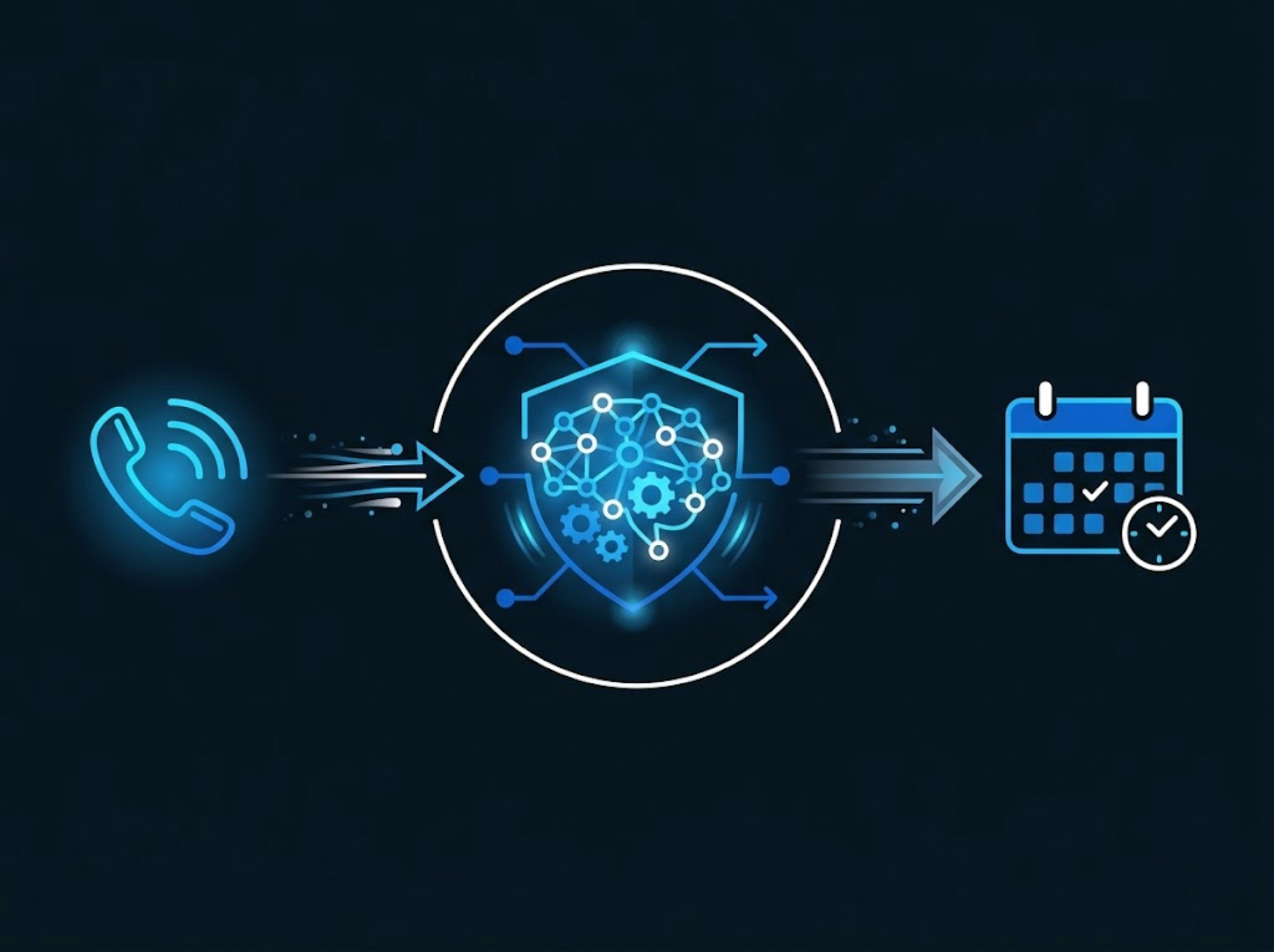
The Technology Stack Behind the Voice
Before diving into each step, it helps to know the four core technologies powering every DonBot AI call:
Twilio
Handles your dedicated phone number and all real-time call routing. Think of Twilio as the phone company layer — it receives the call and knows exactly where to send it.
Retell AI
Manages the real-time voice conversation. Retell converts the caller's speech to text, sends it to the AI brain, gets a response, and speaks it back — all in under a second.
OpenAI
The reasoning engine. OpenAI's language models understand what the caller is actually asking — intent, context, nuance — and generate a natural, human-sounding response based on your business information.
n8n
The automation backbone. Once the AI finishes a call, n8n orchestrates everything that happens next: updating your CRM, sending confirmation texts, notifying your team, and more.
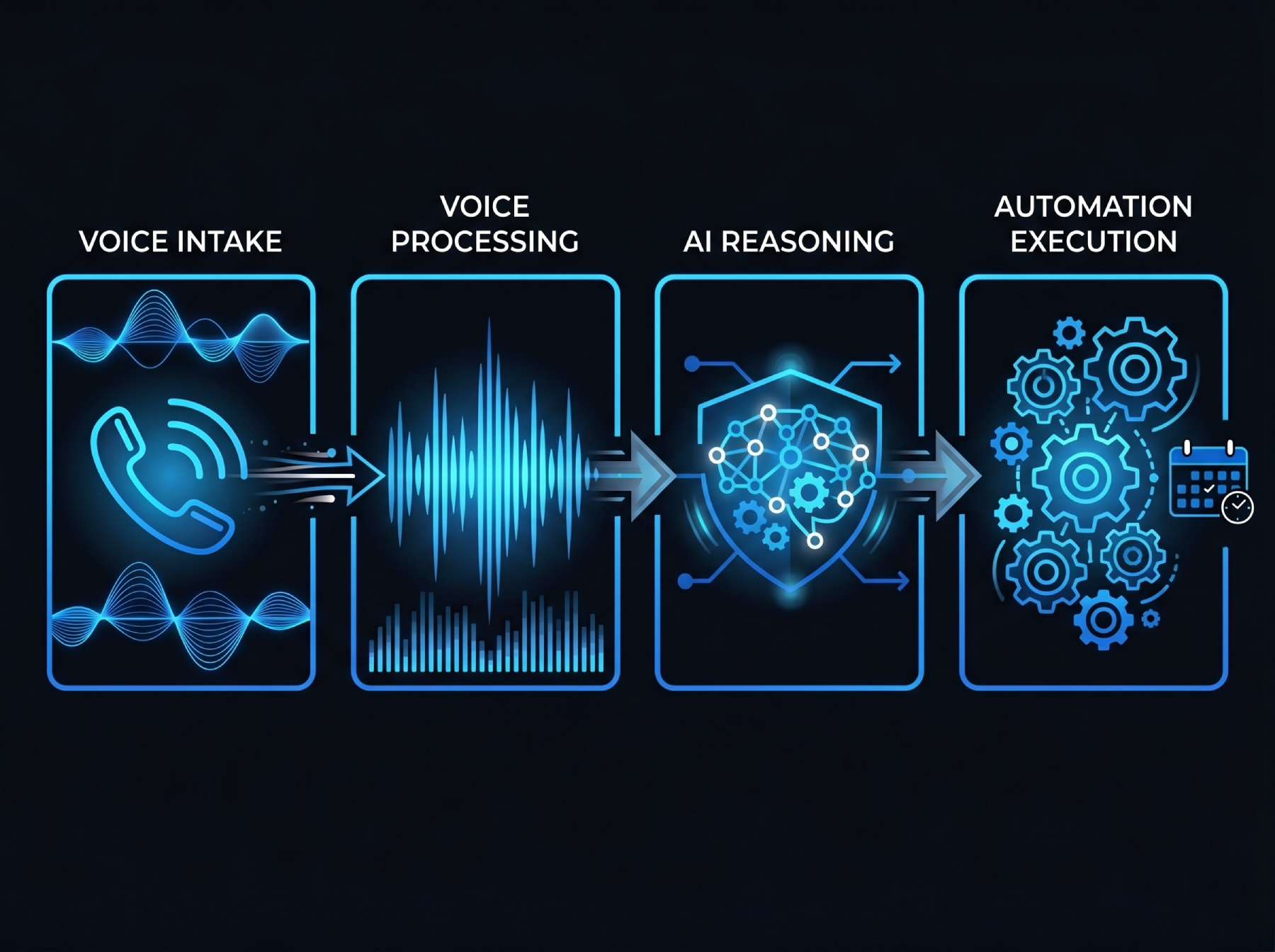
Step-by-Step: What Happens on Every Call
Step 1 — The Call Arrives at Your Twilio Number
Every DonBot AI client gets a dedicated U.S. business phone number provisioned through Twilio. This is a real phone number — you can forward your existing business line to it, or give it out directly.
The moment a call comes in, Twilio fires a webhook — a real-time signal — to Retell AI. This handoff happens in milliseconds. The caller hears no delay, no hold music, and no robotic menu system. They go straight into a live conversation.
Twilio also handles the carrier-level reliability: redundant infrastructure, global routing, and the ability to send and receive SMS on the same number — which becomes important in later steps.
Step 2 — Retell AI Opens the Voice Channel
Retell AI takes over as the real-time voice layer. Its job is to manage the two-way audio stream: listening to the caller, transcribing their words into text almost instantly using speech-to-text models, and converting the AI's text responses back into natural-sounding speech.
This is where the "feels like a real person" quality comes from. Retell AI is specifically optimized for low-latency conversations — meaning the pause between the caller speaking and the AI responding stays under one second in most cases. It also handles interruptions naturally, so if a caller cuts in mid-sentence, the AI adapts instead of finishing its response anyway.
Retell also manages conversation state — it tracks what has already been said in the call so the AI never asks the same question twice.
Step 3 — OpenAI Understands and Responds
Every time the caller speaks, Retell sends the transcribed text to an OpenAI language model — the same family of models powering ChatGPT. This is the brain of the operation.
The model has been given a detailed system prompt that contains everything about your business: your services, pricing, FAQs, hours, location, booking rules, and the tone you want the AI to use. When the caller asks something, the model does not just keyword-match — it genuinely understands the question in context and generates a response that sounds natural and helpful.
For example, if a caller asks "Do you have anything available this Saturday morning?", the AI understands they are looking to book an appointment, checks the intent, and moves the conversation toward scheduling — exactly the way a trained human receptionist would.
The model also supports English and Spanish natively. If a caller switches languages mid-call, the AI follows without hesitation.
Step 4 — Booking Happens in Real Time
If the caller wants to schedule an appointment, the AI handles the entire booking flow inside the call — no transfers, no hold. The AI collects the caller's name, preferred time, and contact information, then uses a calendar integration (connected through Retell's function-calling capability) to check real availability and lock in the slot.
The caller gets a verbal confirmation before they hang up. No confusion. No double-booking. No back-and-forth.
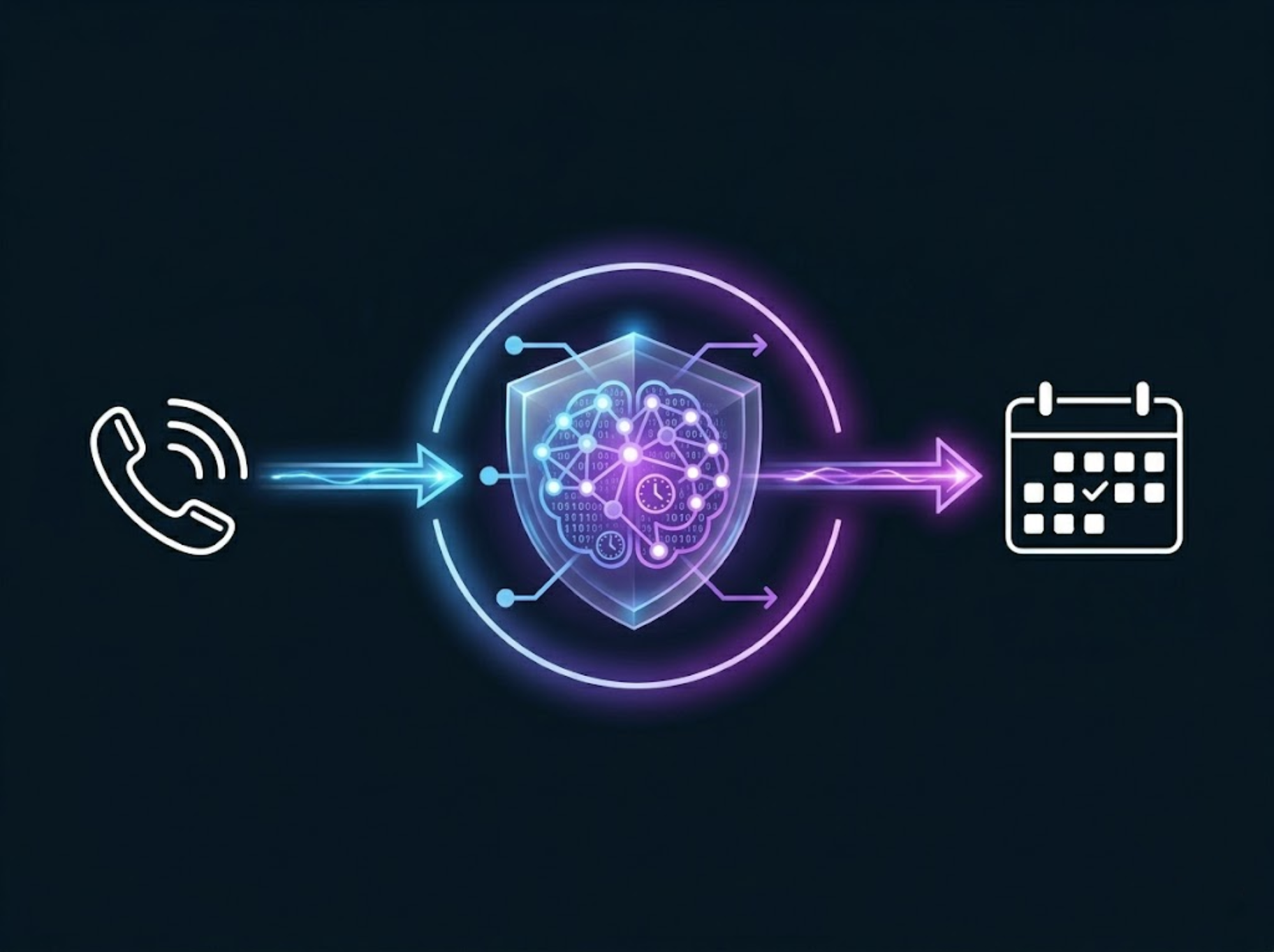
Step 5 — n8n Runs the Post-Call Automation
When the call ends, Retell AI sends a webhook to n8n — an open-source automation platform — with a full summary of everything that happened: caller name, phone number, intent, outcome, and any data collected during the conversation.
From there, n8n acts as the operations engine. Depending on how the call went, it can trigger any combination of the following automatically:
- SMS Confirmation: A text is sent to the caller via Twilio confirming their appointment details, address, or next steps.
- CRM Update: The caller's information is logged or updated in your CRM (GoHighLevel, HubSpot, Salesforce, or any tool with an API).
- Team Notification: Your team gets an instant alert — via SMS, email, or Slack — that a new lead came in or a booking was made.
- Google Review Request: After an appointment is completed, n8n can automatically send a follow-up text asking the client to leave a review.
- Follow-Up Sequence: If the caller did not book, they can enter an automated nurture sequence — a series of SMS or email touchpoints designed to bring them back.
Step 6 — Missed Calls Trigger Their Own Workflow
If somehow a call slips through — network issue, caller hung up before the AI connected — Twilio detects it and triggers a separate n8n workflow instantly. The missed caller receives an automatic SMS within seconds:
"Hey, we missed your call! We'd love to help. Click here to book a time or reply with your question and we'll get back to you right away."
This single step recovers a significant portion of leads that would otherwise be permanently lost to a competitor who answered first.
Why This Architecture Matters for Small Businesses
Each of these tools — Twilio, Retell AI, OpenAI, n8n — is enterprise-grade infrastructure used by companies spending millions of dollars on technology. DonBot AI assembles them into a single, configured system that a local business can turn on without an IT team, without a developer, and without a six-figure budget.
What You Get
- A real phone number that never misses a call
- A voice that sounds human and responds instantly
- An AI that knows your business inside and out
- Automated follow-up that runs without you
- Every call logged, every lead captured
What You Don't Need
- A developer to set it up
- A full-time receptionist
- Manual CRM entries after every call
- Checking voicemail at the end of the day
- Chasing leads who never heard back
Want to See It in Action?
The best way to understand how DonBot AI sounds and feels is to call it yourself. Every plan includes a live demo so you can experience the conversation before committing to anything.
If you have questions about how any part of the stack integrates with your existing tools, book a call and you will speak directly with the founder — not a sales script.
Ready to put this to work for your business?